Natural Planning
Getting Things DoneNatural Planning is a flexible way of thinking a situation through until its desired outcome and next action are clear. Its decisive move is to connect an image of success to something that can be done in the physical world: rather than waiting for a method to appear before imagining what is wanted, it begins by clarifying the result and then works toward it through ideas, organization, and action.
Definition and Operating Logic
The method is described as an integrated, flexible, aligned way to think through any situation. Its core is not a detailed plan imposed in advance, but a sequence of mental and practical tasks: challenge the purpose of what is being done, form a vision of success even when the means remain uncertain, allow ideas to surface without judgment, organize information into components, sequences, and priorities, and decide on real next actions.
The book treats clear outcomes as a demanding professional skill, not a matter of simply stating an obvious goal. What a person or group is trying to accomplish must be defined and redefined across different levels, with resources continually directed toward completing the work effectively. Imagining the desired result before knowing how to reach it is presented as a way to help the mind generate and recognize possible methods, rather than a retreat from practical planning.
From Concern to a Next Action
A short exercise makes the method concrete. The reader first writes down the project or situation currently consuming the most attention: something pressing, distracting, interesting, or in need of resolution. The concern might be an imminent vacation requiring last-minute decisions or an unexpected inheritance of six million dollars. The point is to take an indistinct mental preoccupation and give it a defined place on the page.
The next step is to describe the intended successful outcome in one written sentence: what would have to happen for the matter to count as done? Examples include taking a Hawaii vacation, resolving a situation with a customer, clarifying a divisional management structure, or implementing a new investment strategy. This outcome statement supplies a finish line against which action can be judged.
The exercise then asks for the very next physical action that would move the situation forward. That might mean making a call, writing an email, brainstorming with pen and paper, or speaking face-to-face with a spouse, secretary, attorney, or boss. The test is whether the action can be visibly performed now, not whether the whole project has already been solved. More generally, the next action is the next physical, visible activity needed to move present reality toward completion.
The book reports that even two minutes spent defining an outcome and its next action can bring a small increase in control, relaxation, focus, and motivation. The contrast is between merely carrying a concern in conscious attention and translating it into a result and a move. Natural Planning extends that small shift into an ongoing way of working.
Ideas, Organization, and Review
Brainstorming is important because it lets a person express and capture ideas, perspectives, and project details before shaping them into components, sequences, and priorities. The method asks for openness to good and bad ideas without judgment at the generative stage, followed by the discipline of organizing what has emerged toward a particular outcome. Creativity and structure are therefore complementary: neither an unexamined burst of ideas nor a premature fixation on procedure completes the work of planning.
The final movement is physical action. Defining outcomes and actions for what counts as work is presented as the basic principle of the model; when those two points become ordinary features of daily life, the book argues, productivity reaches a higher baseline. Brainstorming adds a means of capturing the material of projects, while the outcome and next-action focus gives that material direction.
Planning also depends on keeping reminders in a system that is reviewed regularly. The book describes the Weekly Review as critical because potential actions must be revisited often enough that the mind does not take back the job of remembering and reminding. Projects, active plans, next actions, agendas, waiting items, and someday-or-maybe possibilities all belong in that review. It gathers and organizes loose strands, supporting the rapid decisions made in the moment with a more elevated check of the whole field of commitments.
Individual and Organizational Effects
The method is presented as useful beyond individual projects. The book reports that executives have used natural planning to frame important meetings and discussions, and that brainstorming has become a standard tool for many people. It also reports that even limited use can bring significant improvement, while emphasizing that applying the approach to every aspect of personal and professional life remains difficult and uncommon.
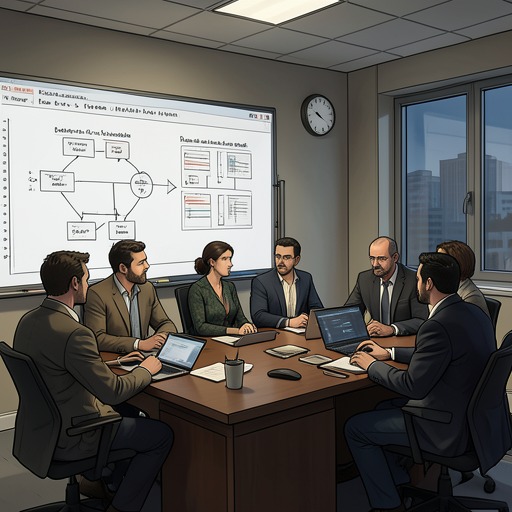
In organizations, the need for a next action is especially visible when a meeting ends with only a vague sense that something ought to happen. The book criticizes collaborative settings in which participants hope the task will fall to someone else, and argues that genuine cooperation requires defining what needs to be done and who is responsible for doing it. Clarifying the outcome and action at the front end of work is contrasted with waiting until pressure forces a response; the former supports operational responsiveness and gives people a clearer basis for acting together.
The proposed effect is not limited to efficiency. Taking responsibility for defining incomplete work and the moves needed to complete it is said to build self-worth by encouraging people to act before external pressure and internal stress compel them. The next-action question challenges a victim mentality because it assumes that change may be possible and asks what can be done. Where a circumstance cannot be changed, the book says, it must instead be incorporated into strategy and tactics. Natural Planning thus joins a practical discipline of outcomes and actions to a broader claim about agency: a clearer picture of what is wanted makes purposeful movement possible.